May 3
Quick Hits
Questions
Treason as a crime prosecuted on the federal level of the United States government is a well-known concept, even if prosecutions for it are rare. There have been two instances in American history where a state prosecuted someone for an act of treason against it. One instance occurred in 1841-42, when Thomas Wilson Dorr was prosecuted for his namesake “Rebellion” against the state of Rhode Island, as his disagreement with how that state continued to use anachronistic rules requiring property ownership to determine voter eligibility led him into organizing an alternative election (that he won) with broader eligibility criteria. Who is the other person to have been found guilty of treason against an individual American state? One odd aspect about that particular instance is that the trial occurred in the city of Charles Town, which is no longer in the state that accused this man of treason.
Dan Marino was drafted by the Miami Dolphins as the 27th pick in the first round of the 1983 NFL Draft - the sixth quarterback taken during that single round, though arguably going on to be the most accomplished. He also was the first draft pick ever of the now-defunct United States Football League, having been chosen first by the Los Angeles Express in that league’s inaugural collegiate draft, held in January of that same year. But that’s not all! Marino actually was drafted a third time. What third team drafted him? In that same draft, this Midwest-based team would go on to select another future Hall-of-Fame quarterback, John Elway, though neither of these stars would go on to play for this organization.
Last time we discussed “Tam O’Shanter,” the 1790 poem by Robert Burns about how its title character angered a coven of witches outside the town of Ayr. The painting that accompanied that question showed the poem’s climactic moment, as one witch, Nannie, nearly was able to catch up with Tam, snatching the tail of Tam’s horse, Meg, just as Tam crossed a river and thus into freedom (witches, it seems, do not like to cross moving bodies of water). What is the name of the river that Tam crossed over to find safety? This forty-mile-long river probably is most famous for that bridge mentioned in the poem - and not just because of the poem, but also because the bridge lent its name to the title of a 1947 work whose name in turn inspired a musical that is nominated for Best Musical at the Tony Awards to be held later in 2026.

This term was coined by novelist Herman Wouk in a 1980 speech, called “Sadness and Hope,” that he presented to the Naval War College. In that speech, Wouk cited historical precedent to suggest that the then-ongoing Cold War posed risk for escalation, but that he was optimistic that the “younger men and younger women” of the next generation could avoid a repeat of the mistakes of the past. Harvard’s Graham T. Allison has built up a minor industry studying this concept by modifying Wouk’s idea to give it additional context, writing a book with this phrase in its title as well as several articles, including one from 2012 discussing how this concept already had been “sprung in the Pacific.” What term, going back to the circumstances facing Greece in 431 B.C., but also quite relevant to world today, is being discussed?
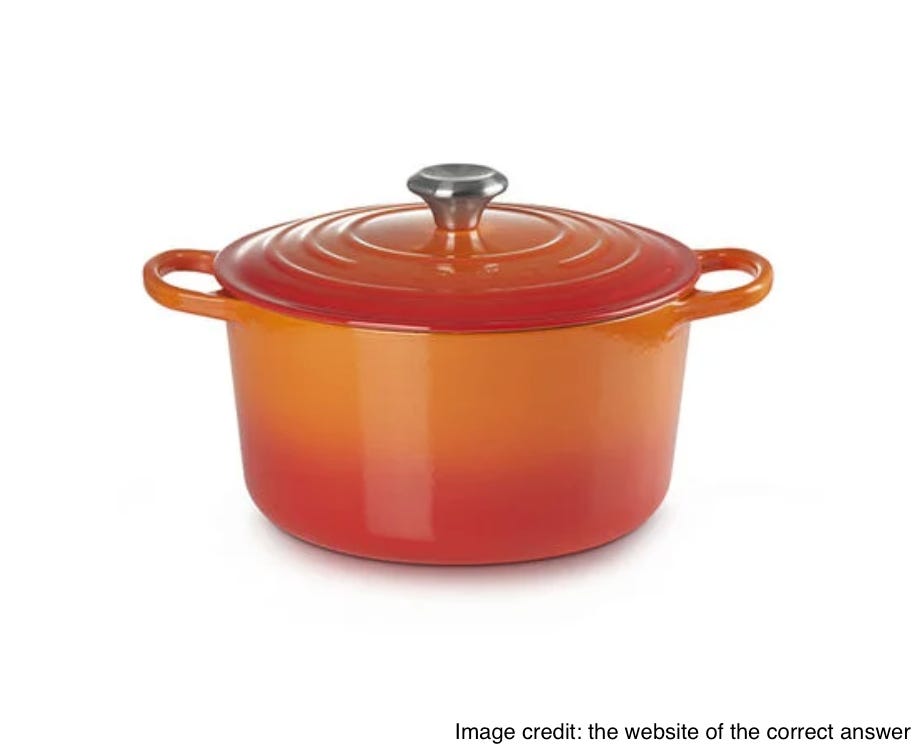
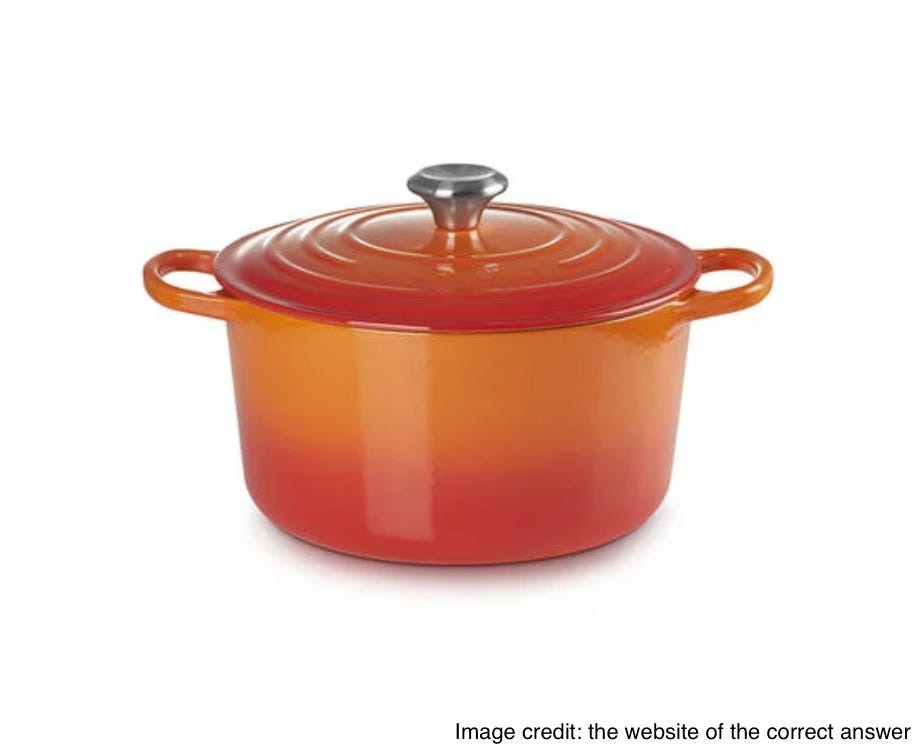
While this company does make other kinds of cookware, it is most famous for the design shown below, a flame orange enameled Dutch oven made from cast iron. Despite that association with Dutch ovens, this company originated in Fresnoy-le-Grand, a French town near the border with Belgium. What is the name of this company? Mindful of how these pots first were designed for slow cooking (and as a nod to what the correct answer means when translated into English), users of these items should be advised that there always could be “more wait” before the cooking is done.
Two pieces of music, written by different composers, are attached below (the first is sound credit Daniel Barenboim, Live from Berlin, while the second is sound credit Deutsche Grammophon). The first is the eighth example of a particular kind of work by its composer, and overall it is categorized as his Opus 13. The second nominally is the sixth example of a particular kind of work by its composer (though really his seventh), but also the final work of his to premiere during his lifetime. In both instances, the name is meant to suggest that the work should be deeply moving and full of emotion - much like John Ruskin used the English language version of this word to suggest a kind of emotional distortion, and not to imply that what he was discussing should be viewed as pitiful. What is the shared name of these works?
In June 2004, the American Film Institute released “AFI’s 100 Years...100 Songs,” their list of the most notable songs in American cinema up to that point. Two performers - Judy Garland and Gene Kelly - each sang five of the songs on the list, with Garland’s performance singing “Over the Rainbow” from The Wizard of Oz being the top song overall. A very plausible argument could be made that another performer ties those two at the top, if you choose to count the partial dubbing work that she provided for Marilyn Monroe for the song “Diamonds Are a Girl’s Best Friend” from Gentlemen Prefer Blondes. When one considers this person’s other appearances on the list, I would argue that counting that only seems fair. Which singer, born Margaret McEathron, is this?
The double-slit experiment is a conundrum in modern physics, with investigations of it suggesting that light can behave both like a wave and like a particle. One explanation for that observation is the “Copenhagen interpretation,” with reflects the general consensus today in the field of quantum mechanics. It says that a system - in this case, light interacting with a double slit - exists in superposition until a measurement forces the wave function to collapse into a single state - such as a wave or particle - that we then observe. Another interpretation avoids that problem entirely, by stating that particles in fact have exact, definite positions always, but move along “pilot waves” that are defined by the quantum wave function. In that interpretation, the particle would pass through only one of the slits, while the pilot wave would pass through both. The described theory is associated with the work of Louis de Broglie and what other man, an American theoretical physicist who revived the theory in the 1950s? If you change the last letter of the surname of one of the scientists associated with the Copenhagen interpretation, you get the name of this scientist - make of that what you will.

A recent case report, leading to a February 2026 article in Nature Medicine, has created a little bit of a sensation in Alzheimer’s research. The case discusses Doug Whitney, a 75-year-old man who does not have symptoms of Alzheimer’s, nor any strong radiographic evidence of its development, despite a strong genetic predisposition to it, as he carries the gene for the protein presenilin 2, which otherwise universally is associated with the development of Alzheimer’s. One aspect that has been investigated is Whitney’s background, as he worked as a ship mechanic in the United States Navy, spending many years working in boiler rooms. When researchers investigated Whitney’s cerebrospinal fluid, they found high levels of biomolecules belonging to a family of proteins known by what name? Research into these proteins goes back to Ferruccio Ritossa’s studies of Drosophila, as he found that a certain external stimulus would cause chromosomal “puffing,” a finding indicating that increased gene expression in those flies was occurring.
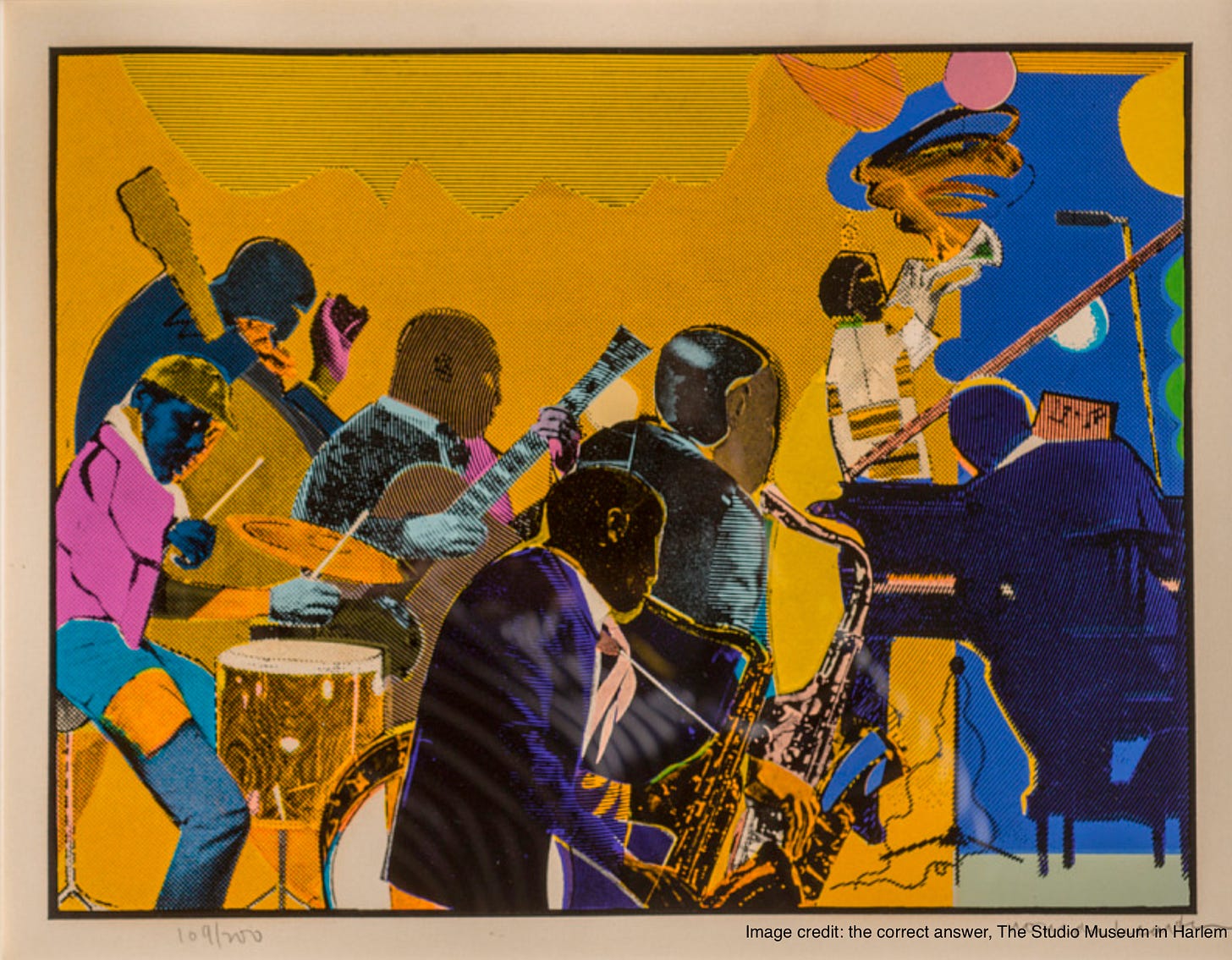
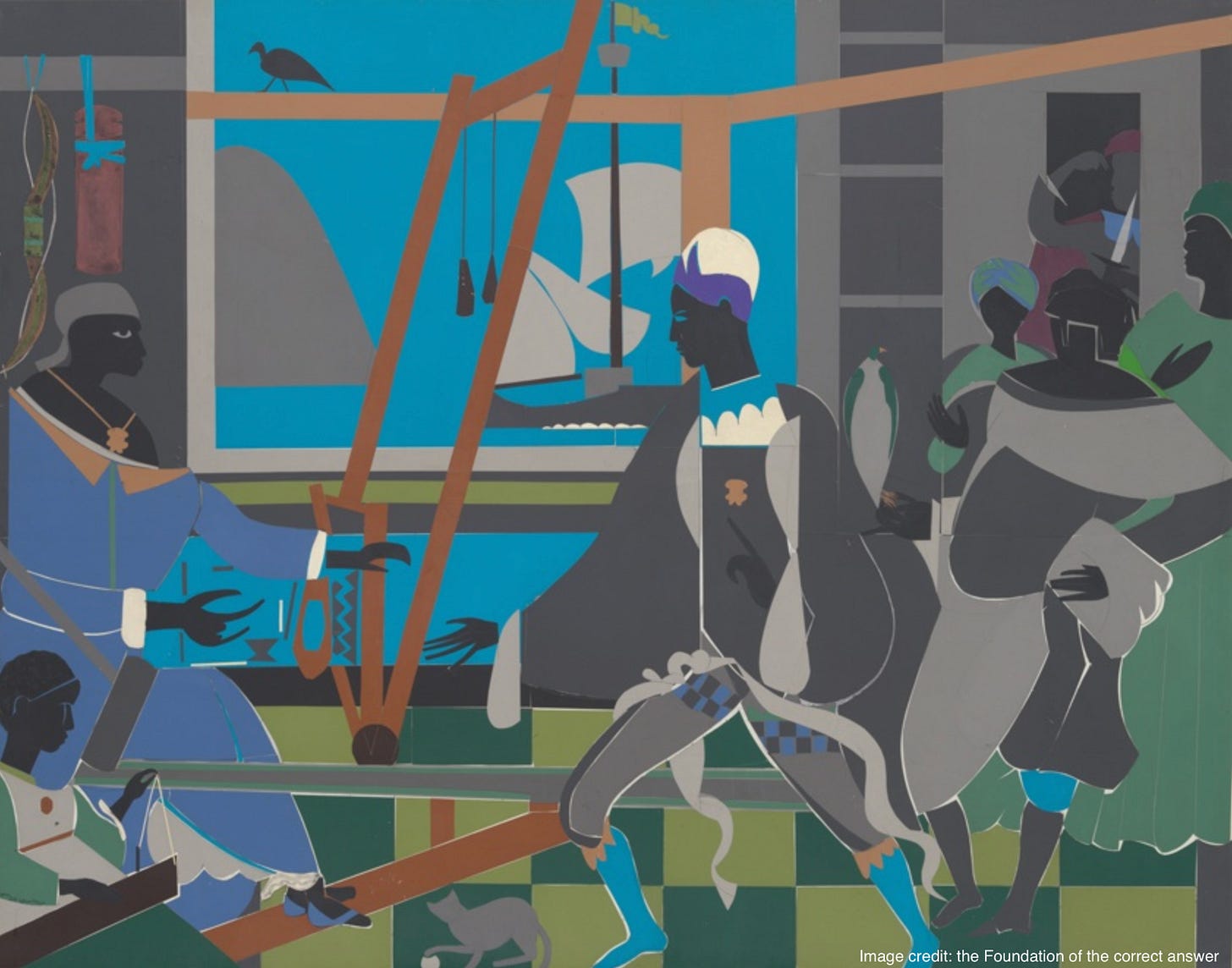
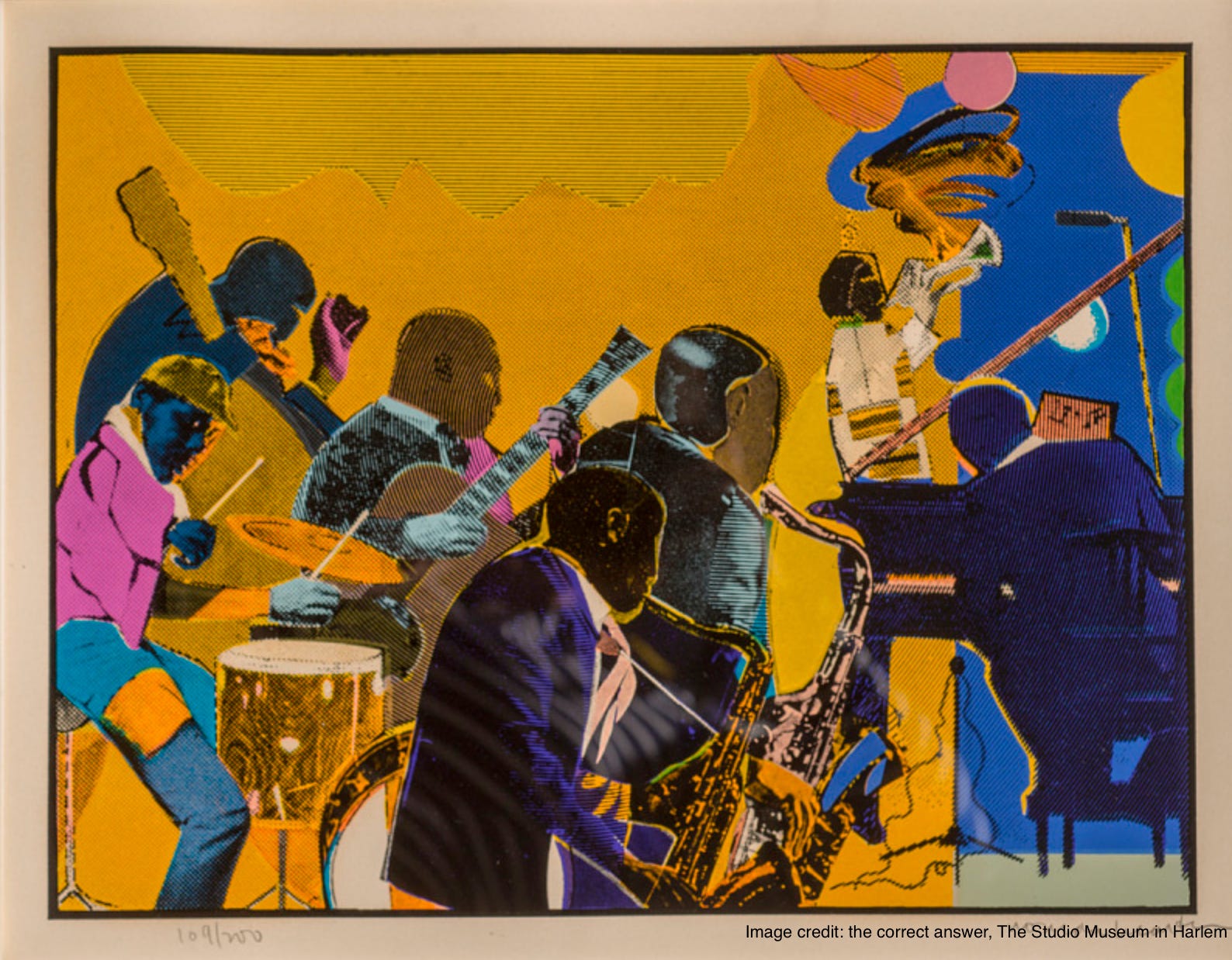
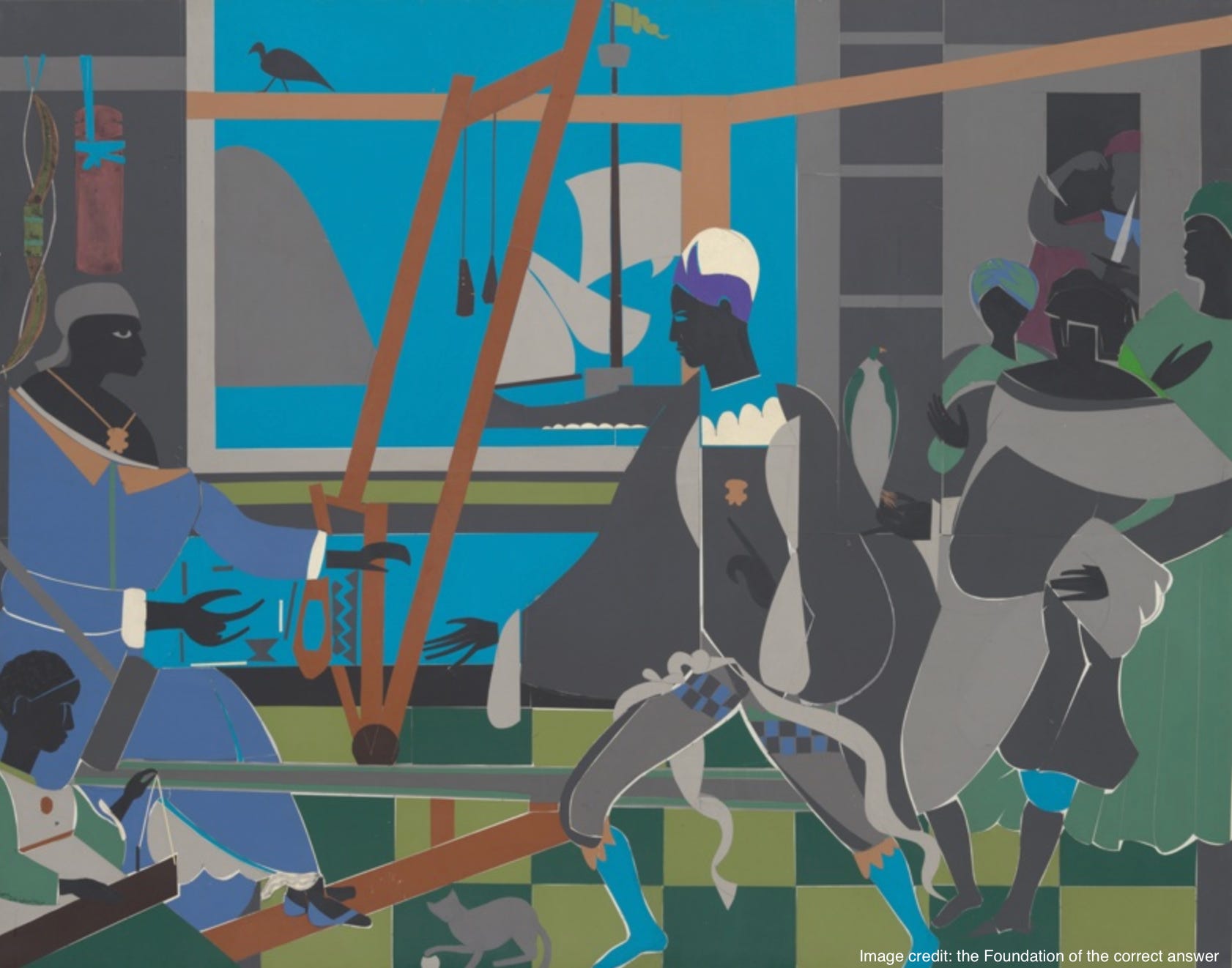
His early work involved somewhat stylized paintings, usually focusing on the African-American experience or on religious themes. During the Civil Rights Movement, he began to focus more on collage work, up to the point to where, upon his death in 1988, The New York Times called him “the nation's foremost collagist.” Examples of that work include Out Chorus (1979), The Return of Odysseus (1977), and Carolina Morning (1984), shown in that order below. Who is the artist so described?